



Nextrove Regulatory Bulletin Issue 2: Navigating the Latest Global Pharmacovigilance Developments
Nextrove has released Issue 2 – Q3 2026 of its Quarterly Pharmacovigilance and Regulatory Intelligence Bulletin, providing an overview of key regulatory developments shaping pharmacovigilance and drug safety requirements worldwide.
A major focus of this edition is the implementation of ICH E2D(R1) and its evolving impact on post-approval safety data management. The revised framework introduces important clarifications around Organized Data Collection Systems (ODCS), including patient support programs, market research activities and digital sources, with implications for case classification, documentation, reporting processes and pharmacovigilance oversight.
The bulletin examines developments across multiple regulatory regions, including the European Union and United States, while also covering important updates from the United Kingdom, Singapore, Saudi Arabia, Australia and South Africa.
Other topics featured in Issue 2 include changes to clinical trial safety reporting requirements, the use of AI in GxP inspection responses, post-approval pregnancy safety studies, real-world data and evidence, pharmacovigilance considerations for advanced therapy medicinal products, and the continued evolution of electronic safety reporting.
With regulatory expectations continuing to evolve across markets, understanding not only what has changed but also its potential operational impact is increasingly important for maintaining effective and compliant pharmacovigilance systems.
Explore Issue 2 of the Nextrove Quarterly Pharmacovigilance and Regulatory Intelligence Bulletin to stay informed and prepare for what’s ahead.


Nextrove PACE: Avoiding Overbuilt PV Infrastructure in Emerging and Small Pharma Organizations
Avoiding Overbuilt Pharmacovigilance Infrastructure in Early Stages
As emerging biotech and small pharma companies progress through clinical development, pharmacovigilance inevitably becomes a growing priority. Regulatory obligations increase, safety oversight becomes more critical, and organizations must demonstrate that they can manage safety activities in a compliant and inspection-ready manner.
The challenge is not whether PV infrastructure is necessary. It is.
The challenge is knowing how much infrastructure is needed today versus what may be needed years from now.
Many early-stage pharma companies make the mistake of implementing pharmacovigilance systems and operating models designed for much larger organizations. In an effort to prepare for future growth, they invest in complex platforms, extensive integrations, and enterprise-grade processes long before their business requires them.
The result is often an overbuilt PV environment that creates unnecessary cost, complexity, and operational burden at precisely the stage when agility matters most.
The Risk of Building for Tomorrow Instead of Today
Early-stage pharma companies operate in a fundamentally different environment than commercial pharmaceutical organizations.
Teams are lean. Processes are still evolving. Clinical programs change direction. Funding priorities shift. Organizational structures are often built in parallel with product development activities.
In this environment, committing to a large-scale PV infrastructure too early can create friction rather than efficiency.
Many enterprise pharmacovigilance platforms assume:
- Mature safety operations
- Dedicated internal PV teams
- Established case-processing workflows
- Significant validation and governance resources
- Stable organizational structures
Most early-stage pharma have none of these.
Instead, they are often working with small cross-functional teams and outsourced partners while building foundational compliance capabilities. The infrastructure they need should support this reality, not assume they have already reached operational maturity.
Regulatory Readiness Does Not Require Enterprise Complexity
One of the most common misconceptions in the industry is that regulatory readiness requires enterprise-level systems.
It does not.
Health authorities expect companies to maintain appropriate oversight of safety activities, document their processes, demonstrate compliance, and remain inspection-ready. They do not require organizations to implement the most complex technology available.
In fact, smaller companies can often achieve compliance more effectively through focused, streamlined processes than through large systems that exceed their immediate needs.
The objective should be to establish a pharmacovigilance framework that is proportionate to the organization’s current stage while maintaining the ability to evolve as requirements become more sophisticated.
The Hidden Costs of Overbuilding
The financial investment associated with enterprise PV platforms is often only part of the story.
Beyond licensing costs, organizations frequently encounter:
- Lengthy implementation projects
- Extensive validation activities
- Consulting and professional services fees
- Internal training requirements
- Ongoing administration and maintenance efforts
For resource-constrained biotech and emerging pharma companies, these investments can consume valuable time and capital that could otherwise be directed toward clinical development and operational growth.
More importantly, long implementation cycles delay value. While systems are being configured and deployed, regulatory obligations remain unchanged.
Organizations may spend months preparing for a future-state operating model while immediate compliance needs continue to demand attention.
Why Flexibility Matters More Than Features
Emerging biotech and small size organizations growth rarely follows a predictable path.
A financing event, licensing agreement, new clinical study, or regulatory milestone can significantly alter operational requirements in a short period of time.
This unpredictability makes flexibility more valuable than feature depth.
The most effective PV infrastructure for early-stage companies is not necessarily the platform with the largest functionality footprint. It is the solution that can adapt as the organization evolves.
That means:
- Supporting outsourced and hybrid operating models
- Allowing processes to mature over time
- Scaling alongside increasing case volumes
- Accommodating organizational growth without requiring major reimplementation
The goal is not to avoid growth. The goal is to avoid paying for complexity before it creates value.
Meet Nextrove PACE: Progressive Adoption and Cloud Evolution
Essentials
Foundation Phase: Start Safely
Ideal for:
- Pre-clinical companies
- Early clinical programs
- Lean biotech teams
Core value:
Establish a compliant pharmacovigilance foundation rapidly and cost-effectively, providing the critical infrastructure needed to support early development activities.
Efficiencies
Acceleration Phase: Automate Intelligently
Ideal for:
- Expanding clinical programs
- Increasing case volumes
- Growing operational demands
Core value:
Automate workflows, streamline processes, and reduce operational burden while scaling globally through cloud-enabled technologies and intelligent automation.
Excellence
Enterprise Readiness Phase: Scale Strategically
Ideal for:
- Late-stage biotech organizations
- Commercialization readiness
- Marketed product portfolios
Core value:
Achieve operational excellence through a fully integrated, AI-powered pharmacovigilance ecosystem capable of supporting global compliance and long-term growth.
What Early-Stage Companies Should Prioritize
Rather than pursuing enterprise-scale pharmacovigilance environments, early-stage organizations should focus on building a strong operational foundation.
That foundation typically includes:
Clear Safety Processes
Well-defined procedures for case intake, assessment, reporting, and oversight.
Inspection Readiness
Documented responsibilities, governance structures, and evidence of compliance activities.
Efficient Technology
Systems that support operational execution without creating unnecessary administrative burden.
Flexible Service Models
The ability to leverage outsourced expertise while maintaining appropriate sponsor oversight.
Scalable Architecture
Infrastructure that can grow as clinical programs, products, and regulatory obligations expand.
These capabilities provide the rigor required by regulators while preserving the agility needed by emerging companies.
PACE (Progressive Adoption and Cloud Evolution) provides the right-sized approach to PV
Nextrove PACE aligns with the emerging and small pharma organizations current needs while creating a practical path for future growth.
Nextrove PACE allows companies to:
- Achieve compliance quickly
- Maintain inspection readiness
- Minimize operational burden
- Control costs
- Scale efficiently as the business evolves
Most importantly, it enables organizations to focus resources on advancing their products rather than managing unnecessary system complexity.
By combining simplicity, speed, and scalability, PACE helps companies establish regulatory readiness, optimize operations, and seamlessly evolve into enterprise-grade pharmacovigilance without the disruption, cost, or complexity of rebuilding systems as they grow
PACE: Where Safety Meets Simplicity.
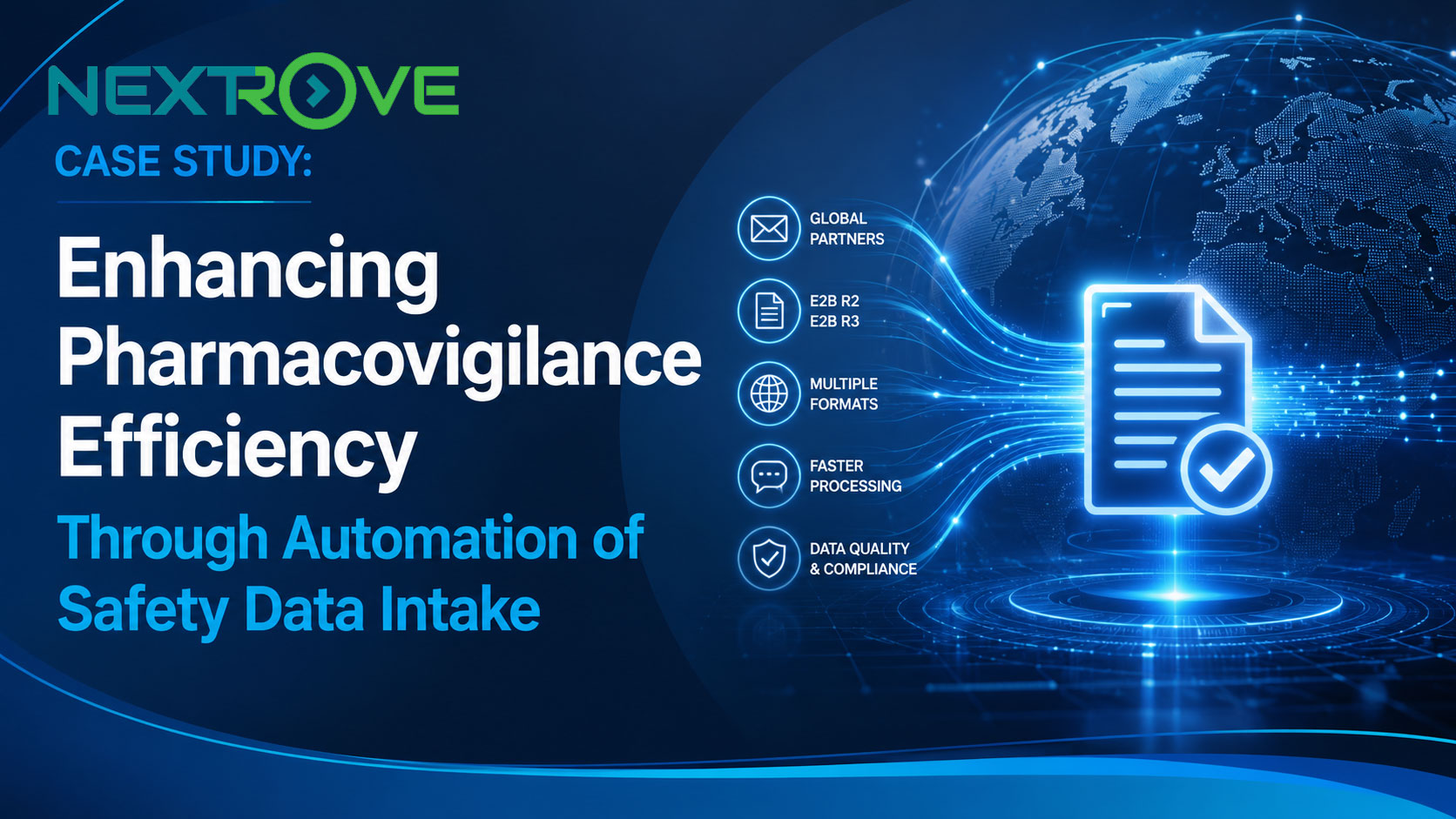
Case Study: Enhancing Pharmacovigilance Efficiency Through Automation of Safety Data Intake
Business Challenge:
As part of its commitment to patient safety and regulatory compliance, Client needed a robust, automated solution for managing incoming safety case data from multiple global license partners. The goal was to streamline the process from intake to transmission into Argus Safety, while ensuring data accuracy, traceability, and timely acknowledgements.
With growing volumes of incoming cases—across multiple data formats (E2B R2 and R3)—an efficient, scalable solution was essential.
Solution Implemented:
The Nextrove cross-functional team implemented fully automated intake and processing using Progressive Intake integrated with Argus Safety. The initiative focused on end-to-end automation and integrity of safety data flow.
Key components of the solution included:
- Automatic Identification & Import: Incoming cases in both E2B R2 and R3 formats are automatically detected and imported into Progressive Intake.
- Automated Acknowledgements: Immediate system-generated acknowledgements are sent to license partners upon import.
- Data Consistency & Traceability: Each case is assigned a Progressive Intake number while retaining the original license partner case number.
- Built-in Quality Controls: Duplicate detection, MedDRA coding, and QC checks are conducted within Progressive Intake before transmission.
- Seamless Integration with Argus Safety: Cases are automatically transmitted, fully populated in Argus Safety, and locked in the “Complete” workflow state.
- Feedback Loop Closure: Successful acceptance in Argus triggers acknowledgements back to Progressive Intake, with full documentation of both internal and partner reference numbers.
Results & Impact:
This initiative has transformed Client’s safety case intake process, yielding measurable improvements:
- 50,000+ records processed annually
- 87% increase in time efficiency
- 70% decrease in database errors
- Faster case turnaround and partner communication
- Improved audit traceability with consistent reference tracking in Argus Safety
Conclusion:
This project highlights the power of automation in pharmacovigilance operations. By integrating Progressive Intake with Argus Safety, the Nextrove team has delivered a scalable and efficient system that ensures regulatory compliance, enhances partner collaboration, and sets a new standard for safety data handling.
The success of this initiative reflects the dedication, innovation, and collaboration of the entire project team. Their work not only supports Client’s mission of patient safety but also reinforces Nextrove reputation as a forward-thinking leader in pharmacovigilance excellence.
Nextrove Progressive GFA: From Manual Burden to Measurable Impact, Transforming Pharmacovigilance Follow-Up Through Automation
In pharmacovigilance, proactive and well-documented follow-up is critical to enhancing case quality, ensuring regulatory compliance, and strengthening signal detection and risk management. Effective follow-up not only improves the completeness and accuracy of safety data but also contributes directly to better patient outcomes.
However, for many pharmaceutical organizations, follow-up management remains a resource-intensive process. Manual coordination, fragmented workflows, and inconsistent tracking can create operational bottlenecks that impact efficiency, data quality, and reporter engagement.
The Challenge
A top 10 global pharmaceutical company faced growing challenges in managing follow-up activities for adverse event reporting. The organization relied heavily on manual processes to coordinate follow-up requests across multiple teams and geographies.
The process was characterized by:
- Repetitive follow-up queries and communications
- Fragmented systems and disconnected workflows
- Labor-intensive tracking and documentation
- Reduced response rates from reporters
- Significant administrative burden consuming thousands of operational hours
The Solution: Nextrove Progressive GFA
To address these challenges, the company implemented Nextrove Progressive GFA, an automated and integrated follow-up management solution embedded directly within its safety database.
The solution streamlined the entire follow-up process by automating follow-up queries generation, tracking, and response management while ensuring adherence to established business processes and regulatory requirements.
Delivering Measurable Results
The implementation of Nextrove Progressive GFA generated substantial operational and quality improvements:
- 250,000 follow-ups generated from post-marketing experience cases
- More than 75% of generated follow-ups managed through the solution
- 30% reduction in processing time compared with manual follow-up workflows
By eliminating many of the administrative tasks associated with follow-up management, the organization significantly improved operational efficiency.
Benefits for Reporters
The automated and structured approach also improved the experience of healthcare professionals and other reporters.
Key benefits included:
- Enhanced reporter experience through simplified interactions
- Structured data capture instead of unstructured free-text responses
- Increased reporter engagement and response quality
These improvements contributed to more complete and actionable safety information while reducing the effort required from reporters.
Benefits for the Organization
From a business and compliance perspective, Nextrove Progressive GFA delivered significant advantages:
- Improved adherence to pharmacovigilance business processes and regulatory requirements
- Reduced resource utilization and material costs
- More accurate and consistent collection of safety data
- Enhanced case quality and data completeness
- Increased operational efficiency and measurable return on investment
From Administrative Effort to Strategic Value
Pharmacovigilance teams are under increasing pressure to manage growing case volumes while maintaining high standards of compliance and patient safety. Nextrove Progressive GFA transforms follow-up management from a manual, resource-intensive activity into an efficient, automated process that delivers measurable business value.
By improving reporter engagement, increasing data quality, and reducing operational burden, Nextrove Progressive GFA enables organizations to strengthen their pharmacovigilance operations while advancing their ultimate goal—protecting patient safety through better-informed decision-making.
When it comes to transformation, success isn’t just about deploying new systems—it’s about empowering people and unraveling old inefficiencies. Nextrove’s deep-dive business redesign combined with responsive change management ensures your organization becomes more than transformed—it becomes transformational.
Let’s talk about your vision. Reach out to explore how Nextrove can support a tailored transformation roadmap built for sustainable success.

Press Release: Nextrove to Host 2026 China Annual Conference Focused on the Future of Pharmacovigilance
Global Experience. Local Precision. Advancing Pharmacovigilance
About Nextrove
Nextrove leads the industry in Pharmacovigilance Professional Services and Solutions. Our unwavering mission, “Empowering Clients to Improve Patient Safety,” propels us on the path to realizing our vision of becoming the first choice for Life Sciences professional services and solutions, in service of our clients, partners, and, above all, the patients we ultimately serve.
www.nextrove.com
info@nextrove.com
+1 347 551 1700
Nextrove LLC.
116 Village Boulevard,
Princeton Forrestal Village, Suite 208
Princeton, NJ 08540, USA
Nextrove China
2 / F, 2900 Nanxingang Road,
Fengxian District,
Shanghai
China
Shanghai, China — Nextrove has announced the 2026 Nextrove China Annual Conference, a two-city event that will take place in Shanghai on September 8 and Beijing on September 10, 2026, bringing together professionals from across the life sciences industry to discuss the evolving landscape of pharmacovigilance.
Held under the theme “Global Experience. Local Precision. Advancing Pharmacovigilance,” the conference will provide a forum for dialogue on the challenges and opportunities shaping modern drug safety. The program will feature industry experts, regulatory professionals, technology leaders, and pharmacovigilance specialists sharing practical experiences, emerging trends, and perspectives on the future of safety operations.
As regulatory requirements continue to evolve and organizations increasingly embrace digital transformation, the event will explore how companies are balancing global standards with local regulatory expectations while integrating innovative technologies into their pharmacovigilance strategies.
The agenda will include presentations, customer case studies, panel discussions, and networking sessions covering topics such as regulatory compliance, operational excellence, AI-enabled pharmacovigilance, cloud transformation, inspection readiness, and the practical application of new technologies across the safety ecosystem.
“Digital transformation is redefining the future of Pharma. The challenge is embracing it without compromising quality, compliance, or patient safety.” said Ratika Dhar, Chief Strategy Officer at Nextrove. “This conference has been designed to encourage open dialogue, knowledge sharing, and collaboration across the industry, creating opportunities to exchange practical experiences and discuss the innovations that are shaping the future of drug safety.”
The conference is expected to welcome representatives from pharmaceutical companies, biotechnology organizations, CROs, regulatory affairs teams, safety operations, quality organizations, and technology partners from across China and the broader Asia-Pacific region.
With its combination of strategic discussion and practical insight, the 2026 Nextrove China Annual Conference aims to foster collaboration across the pharmacovigilance community while highlighting approaches that support compliant, efficient, and future-ready safety operations.
Additional information, including the full agenda, speaker lineup, venue details, and registration, will be released in the coming weeks.
Event Dates & Times
- Shanghai: Wednesday, September 8, 2026
- Beijing: Friday, September 10, 2026
Registration is now open
Join us as we lead the global transformation of pharmacovigilance—starting from China.
Stay tuned — additional speaker details and session topics will be announced soon.
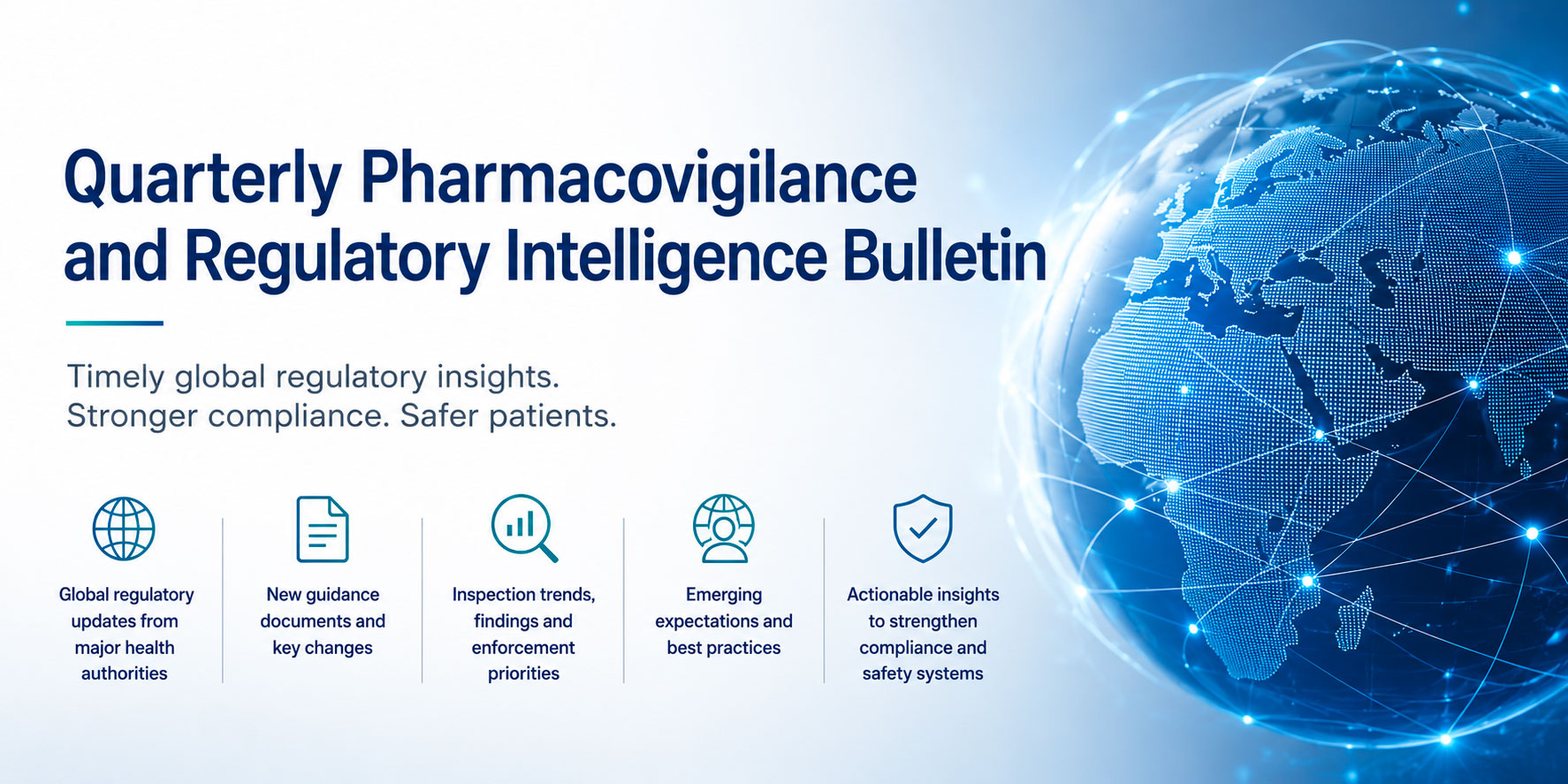
Nextrove Launches Quarterly Pharmacovigilance and Regulatory Intelligence Bulletin
To help organizations stay ahead of the rapidly evolving global regulatory landscape, Nextrove is introducing its Quarterly Pharmacovigilance and Regulatory Intelligence Bulletin—a new service designed to provide timely, actionable insights into the latest pharmacovigilance and drug safety developments worldwide.
Published every quarter, the bulletin delivers a concise overview of key regulatory updates, newly released guidance documents, inspection trends, and emerging expectations from major global health authorities. It also highlights changes that may impact pharmacovigilance systems, reporting requirements, operational processes, and compliance strategies.
Designed for pharmacovigilance professionals, regulatory affairs teams, quality organizations, and senior leadership, the bulletin helps clients proactively assess regulatory changes, anticipate future requirements, and strengthen global compliance efforts.
By transforming complex regulatory updates into practical business intelligence, Nextrove continues its commitment to helping life sciences organizations navigate change with confidence while maintaining the highest standards of patient safety and regulatory excellence.
PACE: Progressive Adoption and Cloud Evolution - Advancing Safety at Your Pace
Emerging life sciences organizations face a common challenge: how to build a compliant, scalable pharmacovigilance (PV) function without investing in a large, complex infrastructure before being ready.
PACE (Progressive Adoption and Cloud Evolution) is a fully scalable pharmacovigilance operating ecosystem designed specifically for growing life sciences organizations. More than a product or software platform, PACE is a client lifecycle ecosystem that enables companies to establish, scale, and mature their safety operations through a flexible, AI-enabled, compliance-ready cloud environment.
Built for Realities
Growing life sciences organizations often face significant operational challenges:
- Limited or non-existent PV infrastructure
- Small or developing internal safety teams
- Increasing regulatory expectations
- Budget constraints
- Unpredictable growth trajectories
- Long implementation timelines associated with enterprise systems
Traditional enterprise solutions often require substantial upfront investment and resources, forcing organizations to overbuild capabilities long before they are needed.
PACE takes a different approach.
Simplicity + Speed + Scalability
No need to build a massive pharmacovigilance infrastructure before being ready.
PACE enables organizations to adopt the right level of PV capability at the right stage of growth, allowing teams to remain agile while maintaining compliance and operational excellence.
Flexible Deployment Across Cloud and On-Premise Environments
Essentials
Foundation Phase: Start Safely
Ideal for:
- Pre-clinical companies
- Early clinical programs
- Lean biotech teams
Core value:
Establish a compliant pharmacovigilance foundation rapidly and cost-effectively, providing the critical infrastructure needed to support early development activities.
Efficiencies
Acceleration Phase: Automate Intelligently
Ideal for:
- Expanding clinical programs
- Increasing case volumes
- Growing operational demands
Core value:
Automate workflows, streamline processes, and reduce operational burden while scaling globally through cloud-enabled technologies and intelligent automation.
Excellence
Enterprise Readiness Phase: Scale Strategically
Ideal for:
- Late-stage biotech organizations
- Commercialization readiness
- Marketed product portfolios
Core value:
Achieve operational excellence through a fully integrated, AI-powered pharmacovigilance ecosystem capable of supporting global compliance and long-term growth.
By combining simplicity, speed, and scalability, PACE helps companies establish regulatory readiness, optimize operations, and seamlessly evolve into enterprise-grade pharmacovigilance without the disruption, cost, or complexity of rebuilding systems as they grow
PACE: Advancing Safety at Your Pace.
Advancing FDA R3 Compliance at Scale: How Nextrove Is Supporting the Next Generation of Pharmacovigilance
As the pharmacovigilance landscape evolves, regulatory transformation continues to redefine how life sciences organizations manage safety data. The latest FDA E2B(R3) requirements mark a critical milestone in this journey—introducing enhanced data structures, improved reporting standards, and greater global alignment.
For many organizations, adapting to these changes is not simply a technical upgrade. It is a complex, business-critical transformation that requires precision, speed, and deep domain expertise.
Over the past few months, Nextrove has been at the forefront of this transition—successfully delivering FDA R3 implementations and upgrades across a diverse portfolio of clients worldwide.
Delivering FDA R3 at Scale
Nextrove has completed FDA R3 implementations for 25+ pharmaceutical and biotech organizations, ranging from emerging biotech to large global enterprises. These engagements included both new system onboarding and upgrades from earlier Argus Safety versions, reflecting the full spectrum of transformation needs across the industry.
This breadth of experience highlights Nextrove’s ability to adapt its approach based on client maturity, system complexity, and regulatory readiness—while maintaining consistent delivery quality.
Managing Complexity Across System Landscapes
One of the defining challenges of FDA R3 implementation lies in the diversity of system environments. Nextrove has successfully supported:
- Single-tenant and multi-tenant architectures
- Production and non-production environments
- Highly complex, multi-instance ecosystems
In several large-scale programs, including multi-tenant environments with multiple parallel setups, Nextrove demonstrated the ability to manage intricate configurations while ensuring consistency and compliance across all environments.
This capability is critical in today’s pharmacovigilance landscape, where organizations often operate across fragmented systems and evolving infrastructures.
Global Delivery with Local Precision
Nextrove’s FDA R3 implementations span multiple geographies, ensuring alignment with both global standards and regional regulatory nuances:
- ~80% North America
- ~15% Europe
- ~5% APAC
This global footprint reflects not only the scale of delivery but also the ability to navigate region-specific requirements, operational practices, and compliance expectations—ensuring seamless integration into each client’s regulatory ecosystem.
Flexible Deployment Across Cloud and On-Premise Environments
Recognizing that no two organizations operate the same way, Nextrove has supported a wide range of deployment models, including:
- Nextrove Cloud-hosted environments
- Client-managed (self-hosted) infrastructures
This dual capability enables organizations to transition to FDA R3 regardless of their hosting strategy—whether leveraging fully managed services or maintaining internal control over their systems.
The result is a flexible, future-ready approach that aligns with each client’s IT strategy and operational model.
End-to-End Upgrade Execution
Nextrove’s FDA R3 engagements go beyond technical upgrades. Each project is approached as a comprehensive transformation initiative, covering:
- System upgrades to FDA R3-compliant versions
- Configuration alignment with updated regulatory requirements
- E2B(R3) compliance enablement
- Validation and testing support
- Post-go-live stabilization and support
This end-to-end scope ensures that clients are not only compliant at launch but also operationally stable and audit-ready in the long term.
A Proven Delivery Framework
At the core of Nextrove’s success is a standardized yet flexible upgrade framework, designed to accelerate delivery while minimizing risk.
This approach enables:
- Faster implementation timelines
- Reduced operational disruption
- Consistent quality across multiple projects
- Scalable execution across diverse client environments
By combining structure with adaptability, Nextrove ensures that each implementation is tailored without compromising efficiency or compliance.
Expertise That Drives Confidence
Behind every successful FDA R3 implementation is a team with deep pharmacovigilance and system expertise.
Nextrove’s specialized teams bring:
- Strong domain knowledge in drug safety processes
- Advanced expertise in Argus Safety systems
- Proven experience across complex, multi-region programs
This combination allows for smooth execution, proactive problem-solving, and high client satisfaction—even in the most demanding project environments.
Enabling the Future of Drug Safety
FDA R3 is more than a regulatory requirement—it is a step toward a more connected, standardized, and data-driven pharmacovigilance ecosystem.
Through its extensive experience across 25+ implementations, multi-region delivery, and complex system landscapes, Nextrove has established itself as a trusted partner in this transformation.
As organizations continue to navigate evolving regulatory expectations, Nextrove remains committed to delivering solutions that are not only compliant—but scalable, efficient, and future-ready.
When it comes to transformation, success isn’t just about deploying new systems—it’s about empowering people and unraveling old inefficiencies. Nextrove’s deep-dive business redesign combined with responsive change management ensures your organization becomes more than transformed—it becomes transformational.
Let’s talk about your vision. Reach out to explore how Nextrove can support a tailored transformation roadmap built for sustainable success.
Case Study: Transforming Pharmacovigilance Operations at a U.S. Pharma Leader
When one of the world’s leading pharmaceutical companies, headquartered in the United States, decided to move to a different safety system, it was quickly realized this was no mere software switch. The move represented an end-to-end transformation of their pharmacovigilance ecosystem—touching data, processes and governance.
The two systems differ significantly in architecture, functionality, and interface, requiring robust change management, extensive training, and strong project governance.
A successful transition demands re-evaluating business processes from the ground up. For many organizations, this is an ideal opportunity to optimize configuration, streamline operations, and eliminate legacy inefficiencies.
Scope
Simplify, centralize and streamline processes, align operational procedures and safety system configuration and maintenance.
Project goals
- Review current state processes and procedures
- Conduct review sessions with internal and external stakeholders
- Map owners and stakeholders to the process flow
- Identify and summarize areas of improvement/opportunities
- Develop the future state model, RACI & strategic roadmap
- Recommend options and finalize areas of opportunities
- Develop overall project plan for implementation
Benefits
The transformation unfolded in three phases:
Benefits were substantial:
- Configuration changes were reduced, cutting down both time cycles and vendor costs
- Delays in implementation and the need for contingency plans dropped significantly, improving compliance readiness
- Verification and quality checks became faster and more reliable
- System maintenance was simplified, streamlined through implementation of a Company-wide single place of reference
- Onboarding newly acquired products became more efficient, thanks to standardized processes.
Conclusion
What began as a technology change evolved into a catalyst for operational excellence, empowering the organization to leverage the new safety system capabilities to their fullest.
By combining thoughtful configuration, meticulous data migration, and process optimization, organizations can unlock the full potential of technology while future-proofing their pharmacovigilance operations.
Conclusion
- This case study demonstrates that introducing Nextrove Progressive GFA in pharmacovigilance follow-up is a strategic transformation.
- By integrating intelligent case analysis, automated reminders, customizable queries, and seamless response ingestion, Nextrove Progressive GFA helps organizations to reduce operational burden, improve case quality, strengthen compliance, and achieve measurable ROI.
- In an era of increasing regulatory scrutiny and rising case volumes, Nextrove Progressive GFA represents a critical enabler of sustainable, high-quality pharmacovigilance operations.
Case Study: Transforming Pharmacovigilance Follow-Up with Nextrove Progressive GFA From Manual Burden to Measurable Impact
Transforming Argus Safety Configuration for Efficiency and Quality for a European Company
Proactive and well-documented follow-up in pharmacovigilance enhances case quality, ensures regulatory compliance, and strengthens signal detection and risk management for better patient safety.
Nextrove Progressive GFA automates pharmacovigilance follow-up to drive efficiency, quality and ROI.
Executive Summary
- For a top 10 global pharmaceutical company managing follow-up activities for adverse event reporting had become a significant operational challenge relying on manual coordination across teams and geographies. Repetitive queries, fragmented systems, and labor-intensive tracking processes led to reduced response rates and thousands of hours spent on administrative tasks.
- The organization required a scalable, compliant, and intelligent solution that could streamline follow-up without compromising regulatory standards
- By implementing the Nextrove automated, integrated follow-up management solution within the safety database, the company achieved significant efficiency gains, improved reporter engagement, enhanced data quality, and realized a double-digit percentage ROI—while saving operational hours.
Challenges
Significant Resource Burden
- High Volume of Manual Follow-Ups
- Labor equivalent to thousands of hours annually
- Manual tracking
- Skilled pharmacovigilance professionals spending time on administrative tasks
Repetitive and Inefficient Communication
- Reporters received standard questions, even when partial information had already been provided, thereby reducing the probability of response, increasing data management complexities due to lack of integration.
Lack of System Integration
- Responses required manual reconciliation into the safety database
- Increased risk of transcription errors and delayed case updates
Solution Approach
The transformation unfolded in three phases:
1. Assessment & Diagnostics
The company implemented Nextrove Progressive GFA, automated follow-up management module integrated directly with its safety database system.
Key Features Implemented
- Automatic case analysis to detect missing or incomplete data fields
- Automated follow-up triggers and reminders
- Custom question configuration by product and therapeutic area
- Multi-lingual, configurable query form
- Generation of fillable query form
- Fillable form and case-tailored queries sent to reporters via secure email link
- Automated ingestion of responses into the safety system
- Action item tracking and audit trail management
- All follow-up attempts, timestamps, responses, and outcomes are documented directly within the safety database, ensuring inspection readiness and compliance.
Measurable Impact
Operational Efficiency
- Thousands of hours saved annually, with projected increases as case volume grows
- Reduction in manual tracking and reconciliation activities
- Faster turnaround time for case updates
- Enhanced global consistency in follow-up practices
- Scalable framework to support growing case volumes
Data Quality Improvements
- Higher response rates
- Improved completeness of ICSRs
- Stronger data foundation for signal detection and risk assessment
Compliance and Inspection Readiness
- Full audit trail of contact attempts and responses
- Centralized documentation within the safety database
- Demonstrated due diligence during regulatory inspections
Financial Return
- More than double-digit percentage ROI
- 80% of follow-ups conducted via email
Conclusion
- This case study demonstrates that introducing Nextrove Progressive GFA in pharmacovigilance follow-up is a strategic transformation.
- By integrating intelligent case analysis, automated reminders, customizable queries, and seamless response ingestion, Nextrove Progressive GFA helps organizations to reduce operational burden, improve case quality, strengthen compliance, and achieve measurable ROI.
- In an era of increasing regulatory scrutiny and rising case volumes, Nextrove Progressive GFA represents a critical enabler of sustainable, high-quality pharmacovigilance operations.